


Data has become one of the most valuable assets for modern businesses. Every day, organizations process information from ERP and CRM systems, financial and accounting applications, e-commerce platforms, marketing tools, and Excel spreadsheets. As the number of data sources continues to grow, so does the need to efficiently process, analyze, and provide access to data for business decision-makers.
Growing Volumes of Enterprise Data
The digitalization of business processes means that organizations generate increasing amounts of data every day. This data relates to sales, finance, production, logistics, customer service, and marketing activities. However, simply collecting information does not create a competitive advantage. What truly matters is how effectively that information is used.
To support organizational growth, data must be easily accessible, up to date, and ready for analysis. Traditional data storage methods are increasingly insufficient for companies seeking to expand their business analytics capabilities and make decisions based on reliable information.
Limitations of Traditional Analytics Environments
Many organizations still rely on fragmented environments where data is stored across multiple systems and analyzed using various independent tools. This approach makes data integration more difficult, extends reporting processes, and increases the risk of data inconsistencies.
Another challenge is scaling on-premises infrastructure. As businesses grow, requirements for performance, capacity, and security also increase. Expanding traditional solutions often involves additional costs and greater management complexity.
The Role of Cloud Analytics Platforms in Modern Business
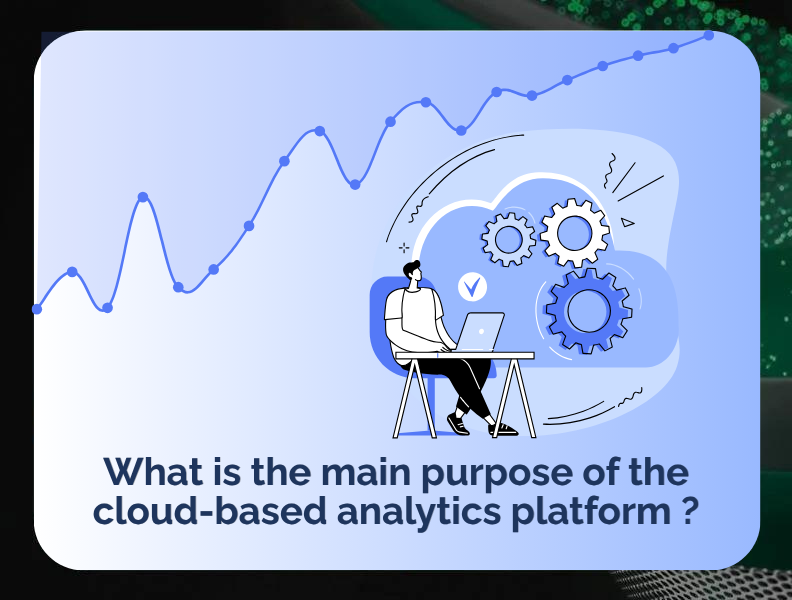
An increasing number of organizations are adopting cloud analytics platforms that enable data centralization, process automation, and stronger collaboration between business and IT teams.
Cloud-based solutions offer greater flexibility, faster deployment of new capabilities, and the ability to scale resources according to current business needs. As a result, organizations can focus on analyzing data and making informed business decisions rather than maintaining complex infrastructure.
Microsoft Fabric: A Response to Modern Analytics Challenges
One solution designed to address the growing needs of organizations is Microsoft Fabric. It is a modern cloud analytics platform that brings together the most important data-related functionalities within a single environment. It combines data integration, storage, analysis, and reporting processes, allowing organizations to use business information more effectively.
With Microsoft Fabric, businesses can reduce the number of tools they use, improve data management, and create a unified environment that supports the growth of business analytics.
What Is Microsoft Fabric?
Microsoft Fabric is a comprehensive cloud-based analytics platform from Microsoft that enables organizations to manage the entire data lifecycle within a single environment. The solution was designed for companies looking to simplify data integration, storage, analysis, and reporting processes.
Instead of relying on multiple separate tools, businesses can perform all key analytics processes on one platform. This reduces IT complexity and improves collaboration among teams responsible for managing and analyzing data.
Key Features and Capabilities of Microsoft Fabric
One of the core principles of Microsoft Fabric is the integration of multiple analytics disciplines within a unified environment. The platform supports data preparation, processing, modeling, analytics, and visualization through interactive reports.
As a result, organizations can manage data more efficiently, automate analytical workflows, and deliver insights to business users faster.
A Cloud-Based Analytics Platform from Microsoft
As a cloud-native solution, Microsoft Fabric offers scalability and flexibility. Organizations can adjust resources based on their current requirements without investing in additional on-premises infrastructure.
The cloud model also enables faster deployment of new features, easier environment management, and seamless access to data from different locations, which is particularly important for organizations operating in distributed work environments.
Integrating Multiple Analytics Disciplines in One Environment
The greatest value of Microsoft Fabric lies in its ability to bring together multiple elements of the data ecosystem on a single platform. It integrates Data Engineering, Data Warehousing, Data Science, Data Analytics, and Power BI, eliminating the need for multiple disconnected tools.
This approach creates a unified analytics environment where data is accessible to different teams and can be used to build reports, analyses, and models that support business decision-making.
What Components Does Microsoft Fabric Bring Together?
One of the biggest advantages of Microsoft Fabric is the integration of multiple data management and analytics domains within a single platform. This allows organizations to manage the entire data journey, from ingestion to reporting, without relying on multiple separate solutions.
Data Engineering Integration
Preparing data for analysis is one of the most important stages of every analytics project. Microsoft Fabric supports data engineering processes by enabling the integration of information from multiple sources, data transformation, and workflow automation.
This makes it possible to create consistent data pipelines, reduce manual effort, and improve the quality of information used for analysis.
Data Warehousing
A modern Data Warehouse enables organizations to store and analyze large volumes of data from multiple business systems. In Microsoft Fabric, this functionality is fully integrated with other platform components, making data management and business analysis more efficient.
This approach simplifies data architecture and enables faster delivery of information to business users.
Data Lake and OneLake
One of the key components of Microsoft Fabric is OneLake, a centralized data storage layer often described as a unified Data Lake for the entire organization.
With OneLake, all teams can access the same data without the need to constantly duplicate information across systems. This reduces data redundancy, improves consistency, and simplifies enterprise-wide data management.
Data Analytics and Data Science
Microsoft Fabric supports not only traditional reporting but also advanced analytical use cases. The platform enables organizations to work with analytical models, analyze large-scale datasets, and deliver Data Science projects.
As a result, businesses can leverage data for forecasting, trend identification, and building models that support better business decisions.
Reporting with Power BI, Fabric AI, and Copilot
An integral part of Microsoft Fabric is Power BI, which enables users to create interactive reports and dashboards that present data in an easy-to-understand format. Organizations can monitor key performance indicators (KPIs), analyze results, and share reports across teams.
The platform’s capabilities are further enhanced by artificial intelligence solutions. Copilot in Microsoft Fabric assists users with report creation, query generation, and data transformation through natural language interactions, accelerating day-to-day data work. This allows even users without advanced technical expertise to create analyses and visualizations more efficiently.
Fabric AI also plays an increasingly important role by leveraging artificial intelligence to automate analytical processes, identify hidden patterns, and support advanced analytics scenarios. AI-powered capabilities help organizations uncover valuable business insights faster and maximize the value of their data.
By combining Power BI, Copilot, and Fabric AI, Microsoft Fabric becomes a comprehensive platform for both data management and AI-powered analytics.
What Benefits Does Microsoft Fabric Offer?
Implementing Microsoft Fabric helps organizations streamline their analytics environments and significantly improve how data is used across the business. By centralizing processes and integrating multiple services into a single platform, companies can analyze information faster, improve reporting, and make more informed business decisions.
A Single Source of Truth
One of the most significant benefits of Microsoft Fabric is the ability to establish a Single Source of Truth, providing a reliable and centralized source of data across the organization.
By consolidating information from multiple systems, businesses eliminate inconsistent reporting and multiple versions of the same data. All departments work with the same up-to-date information, increasing confidence in insights and improving collaboration.
Analytics Process Automation
Preparing data manually for analysis often requires numerous repetitive tasks. Microsoft Fabric automates data integration, processing, and report refresh activities, reducing the need for manual intervention.
Automation shortens the time required to generate insights, minimizes the risk of errors, and allows teams to focus on interpreting results and driving business outcomes.
Scalability
As organizations grow, so does the number of users, data sources, and analytics projects. As a cloud analytics platform, Microsoft Fabric allows businesses to scale resources flexibly based on changing requirements.
This enables organizations to expand their analytics capabilities without investing in additional on-premises infrastructure and supports the deployment of new solutions as the business evolves.
Improved Reporting Efficiency
Through seamless data integration and close alignment with Power BI, Microsoft Fabric enables organizations to create interactive reports based on current data. Automated refresh capabilities ensure users always have access to reliable insights without the need for manual report preparation.
More efficient reporting makes it easier to monitor KPIs, identify trends, and make decisions based on accurate information.
Data Security and Governance
Effective data management involves not only analytics but also ensuring security and controlling access to information. Microsoft Fabric provides mechanisms for centralized data governance, user access management, and security policy administration.
As a result, organizations can better protect their information assets, meet compliance requirements, and manage data access consistently across the enterprise.
Learn How EBIS Can Support Your Organization
At EBIS, we help organizations design and implement solutions based on Microsoft Fabric, Power BI, and other Microsoft technologies. We support clients at every stage of the project, from business requirements analysis and data architecture design to data source integration, modern analytics environments, and interactive reporting solutions.
If your organization is planning to implement Microsoft Fabric, improve data management, automate analytics processes, or build a centralized reporting environment, contact the EBIS experts today.